What Bad Roof Ventilation Actually Does to a Littleton Home
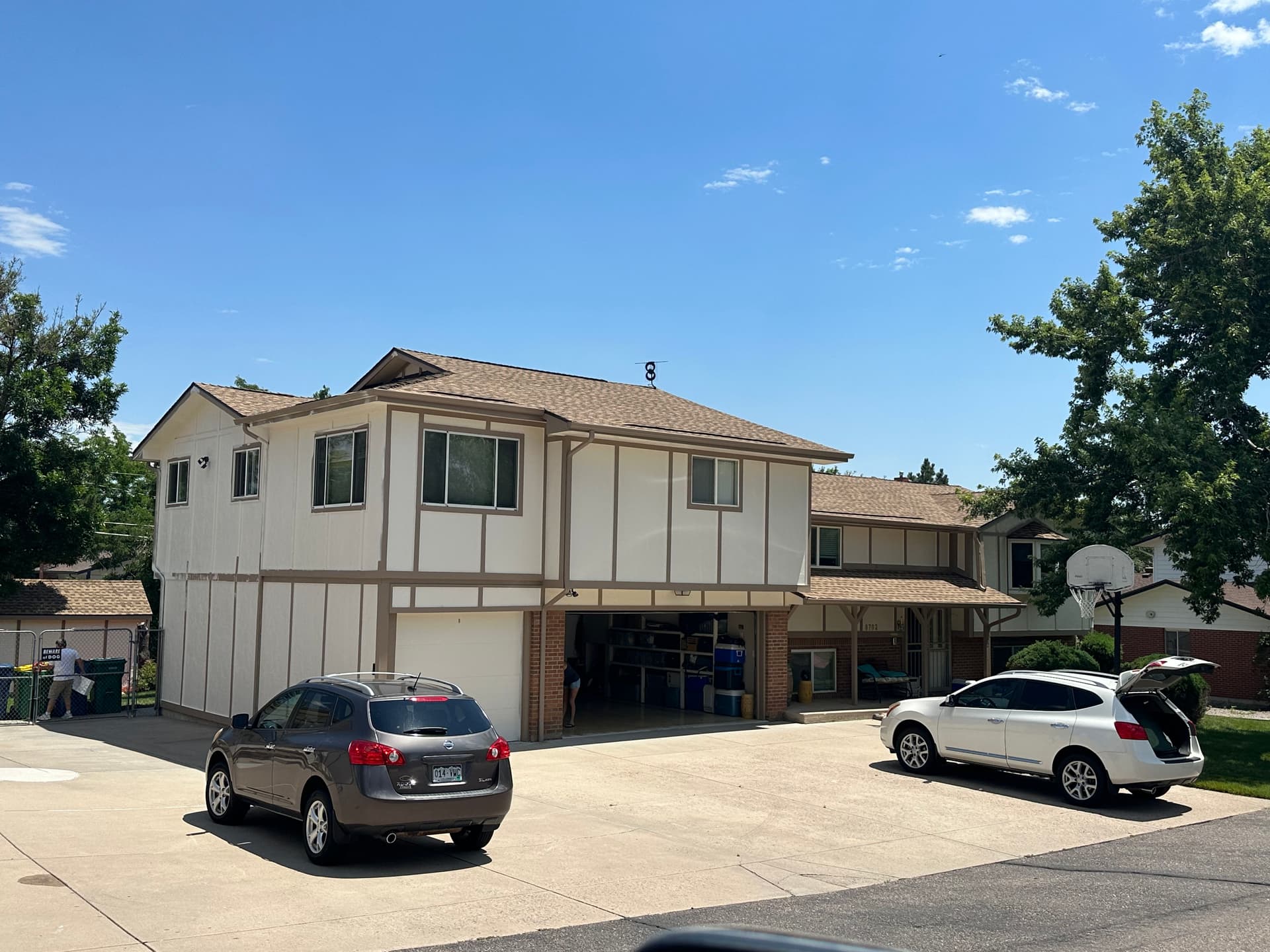
Most roofs fail quietly. The shingles look okay from the street, the ceiling inside is dry, and nothing seems urgent. But underneath all of that, trapped heat and moisture can be doing serious damage to the decking - rotting it out, destroying insulation, and setting the stage for a much bigger problem down the road. That's exactly what we uncovered here in Littleton.
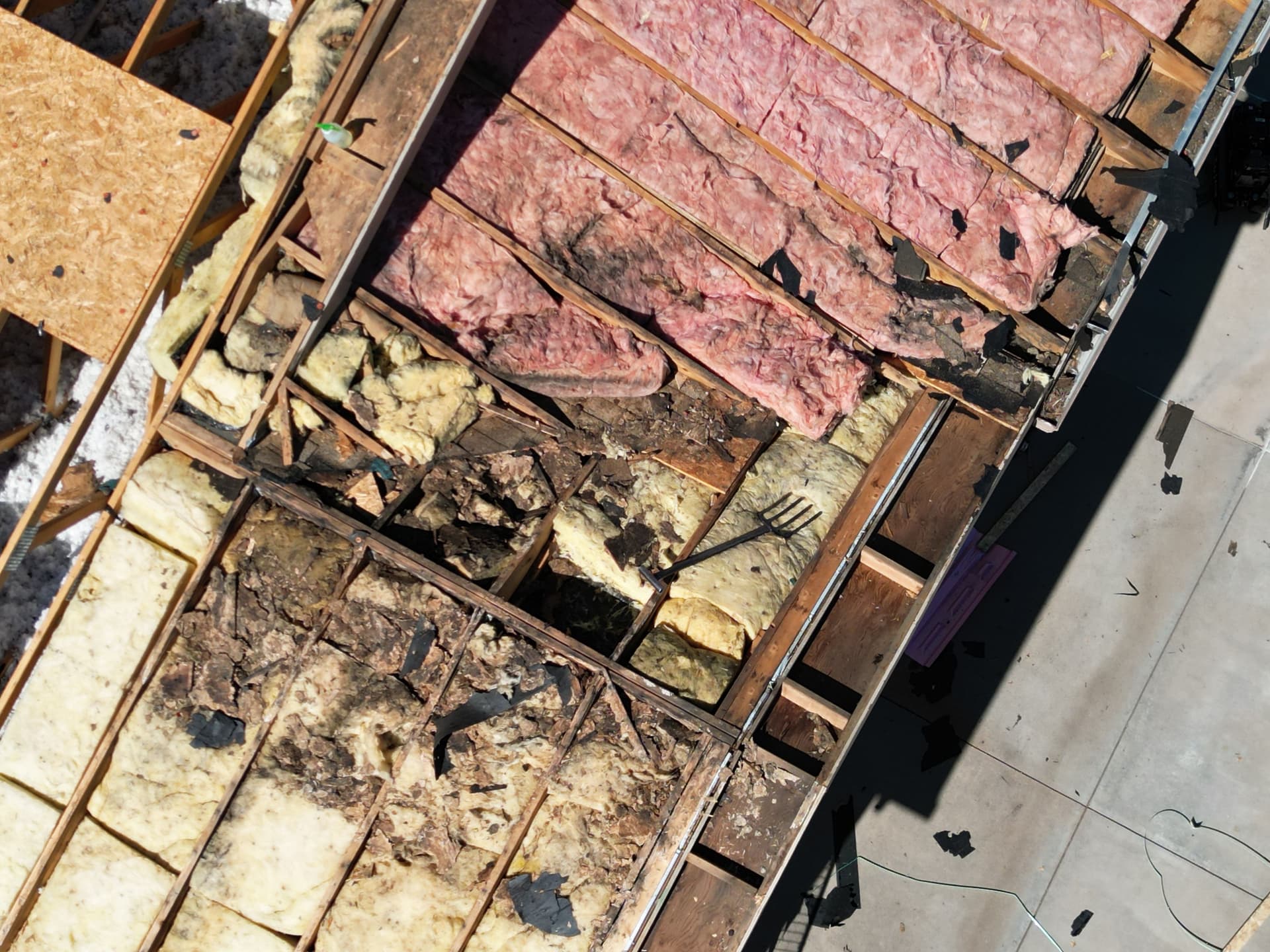
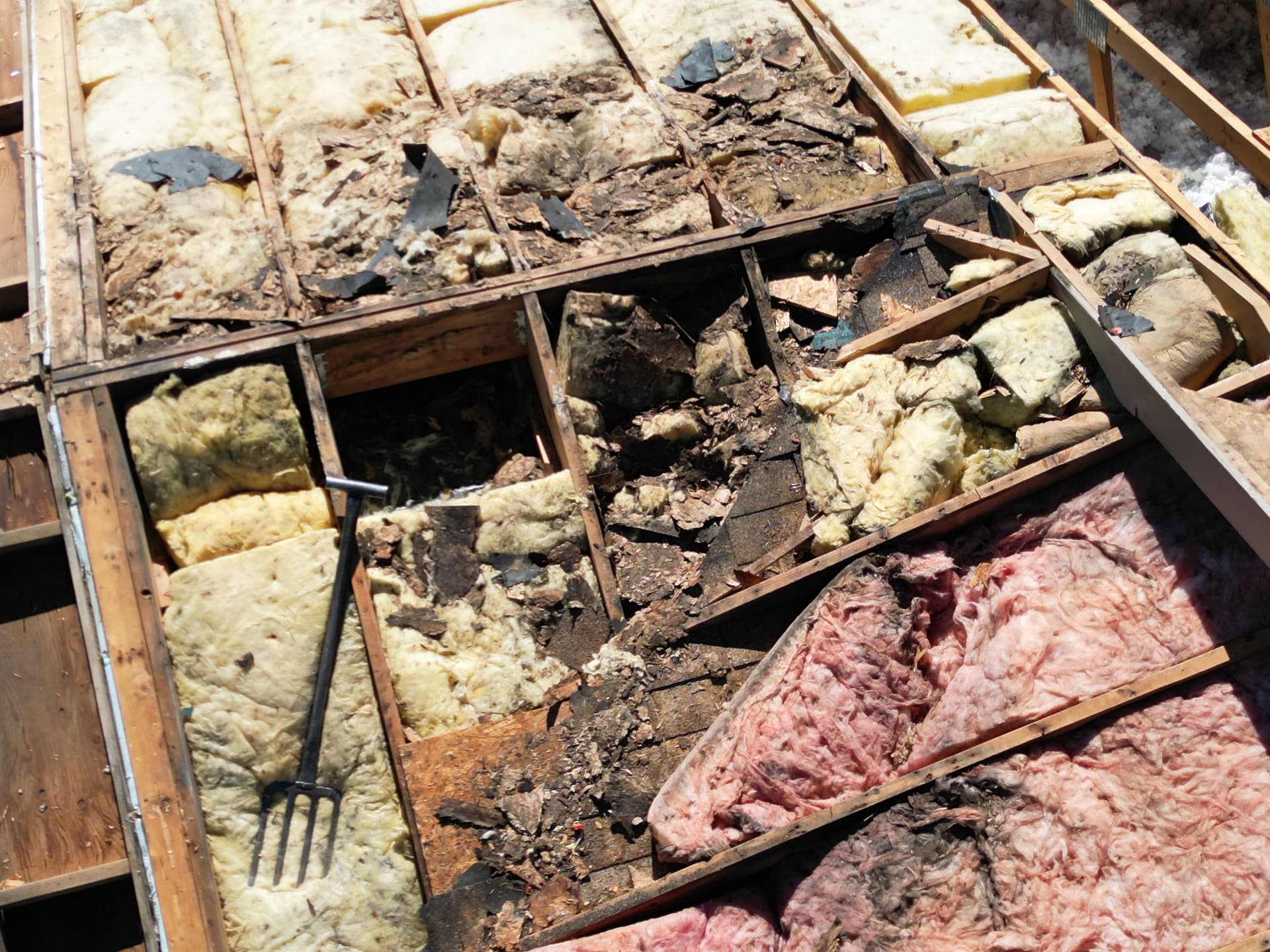
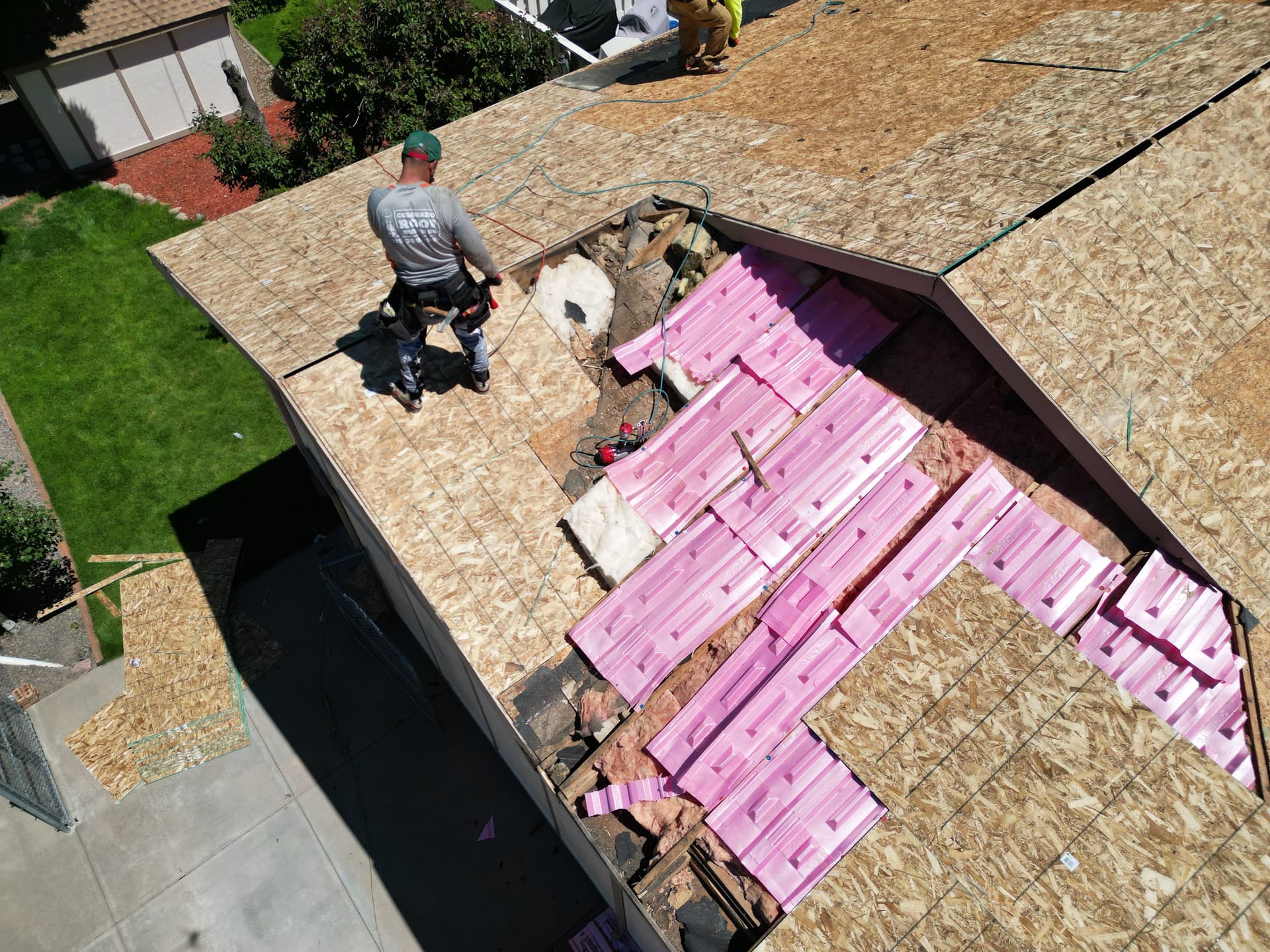
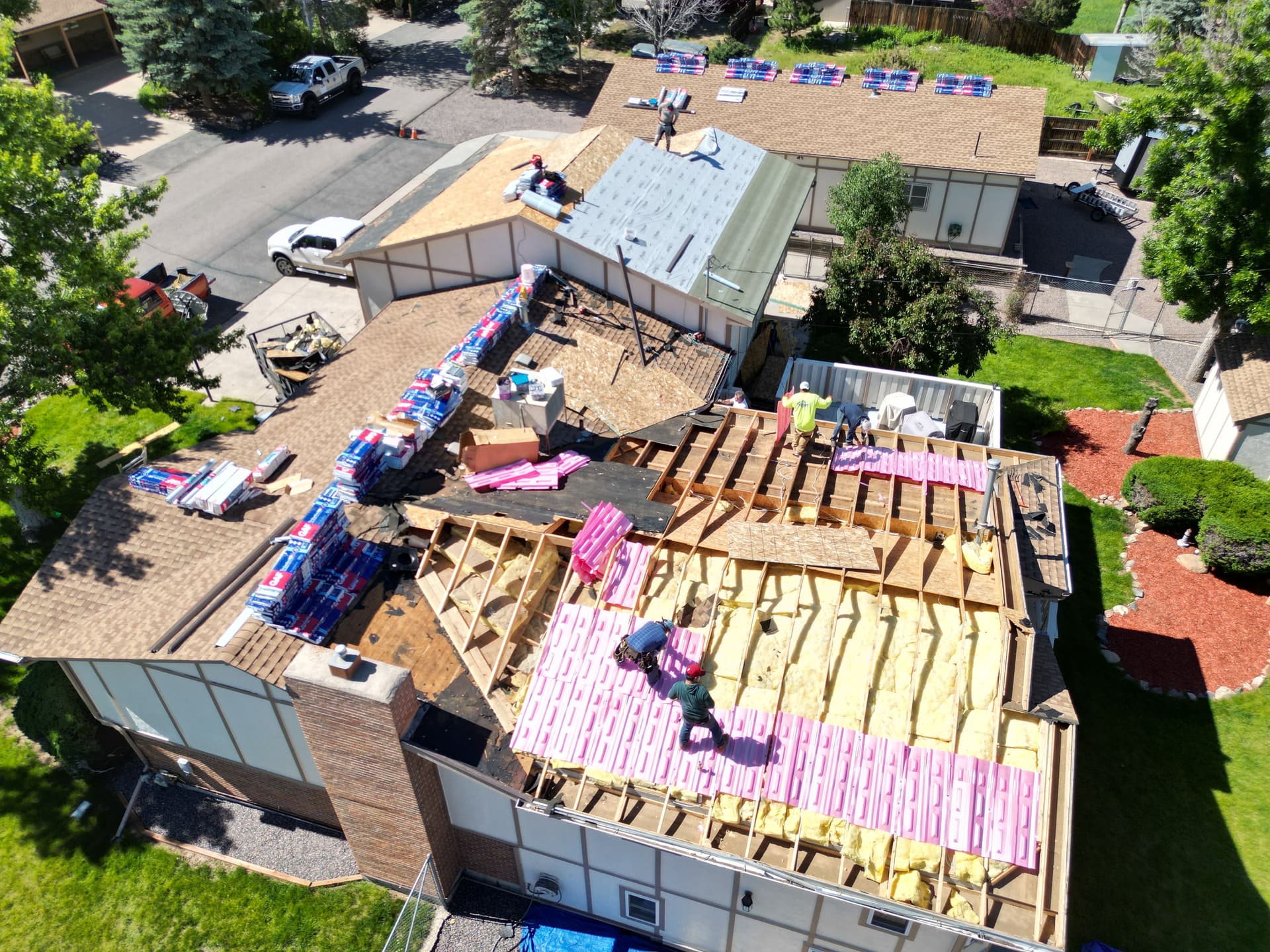
When we stripped back the old roofing material, what we found wasn't pretty. The insulation was dark, matted, and falling apart in sections. The decking beneath it had taken a beating from years of trapped moisture with nowhere to go. This is what happens when ventilation isn't right - it's slow, it's invisible, and by the time it shows up as a problem you can see, the damage is already extensive.
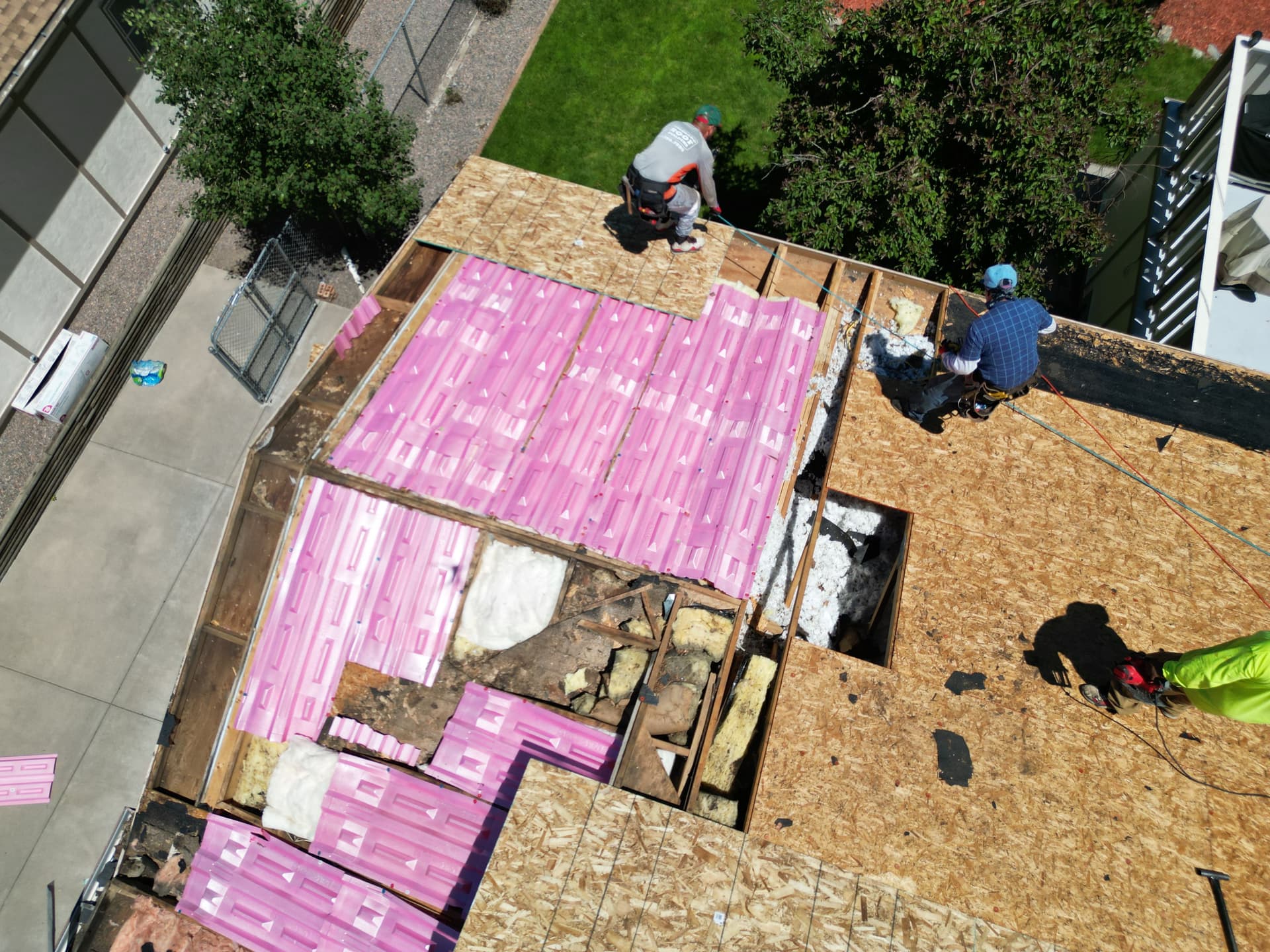
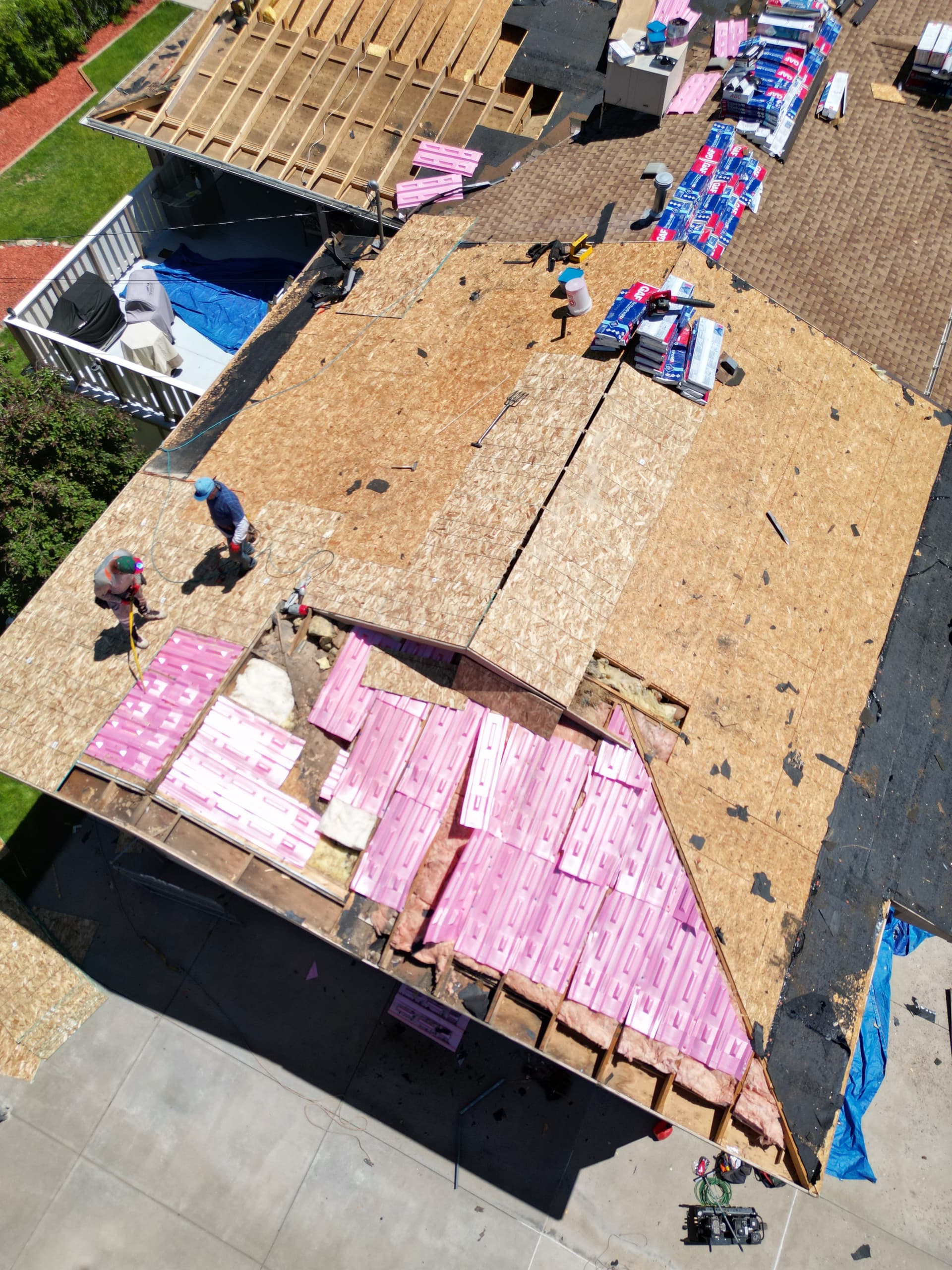
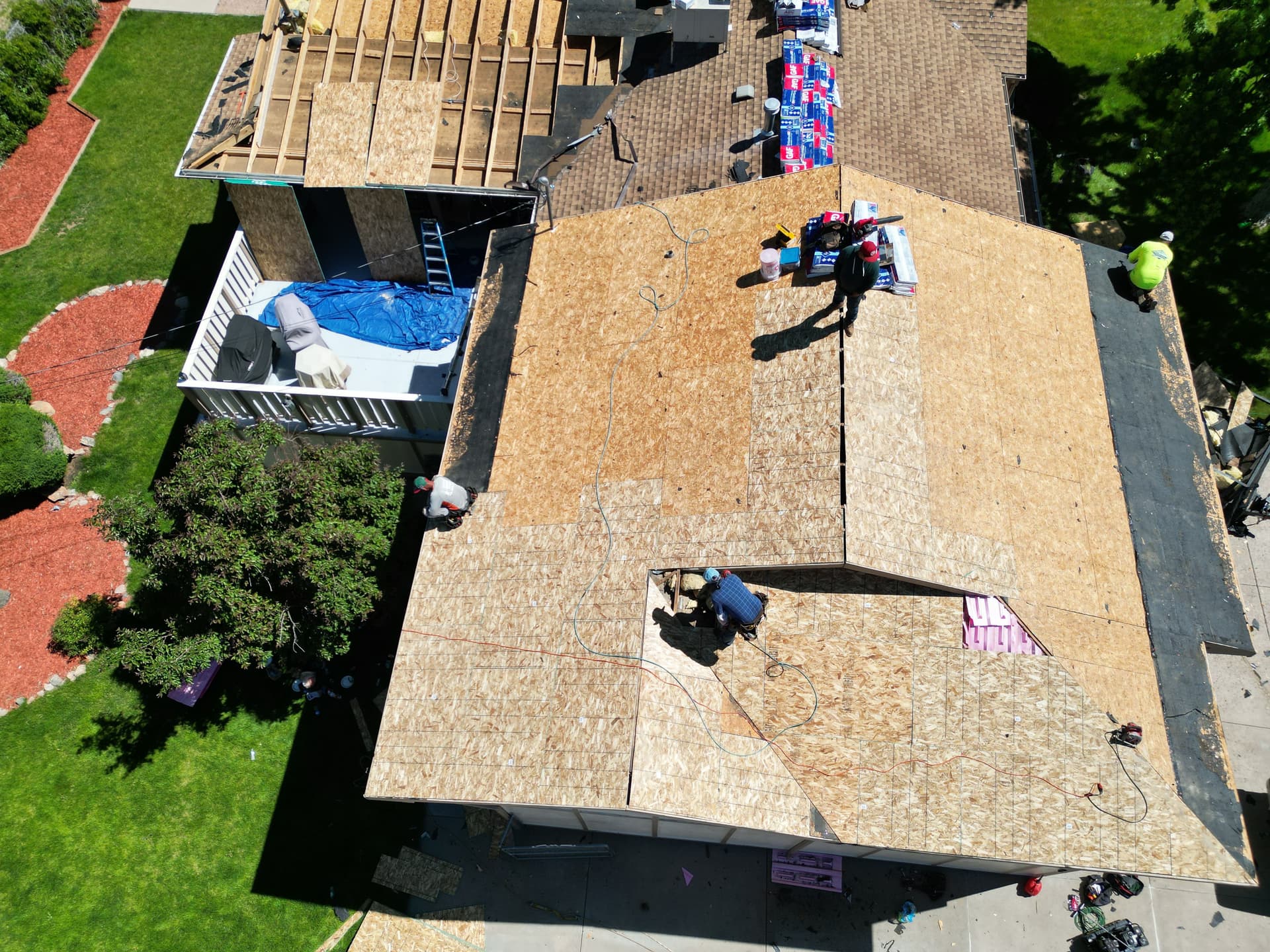
Our crew got to work pulling the damaged decking and rotted insulation completely. From there, we brought in rigid foam board insulation and fresh OSB decking across the affected sections. It's not a quick patch - it's a full rebuild of the roof system from the structure up. Every section of new decking was fastened properly before we moved on to the next step.
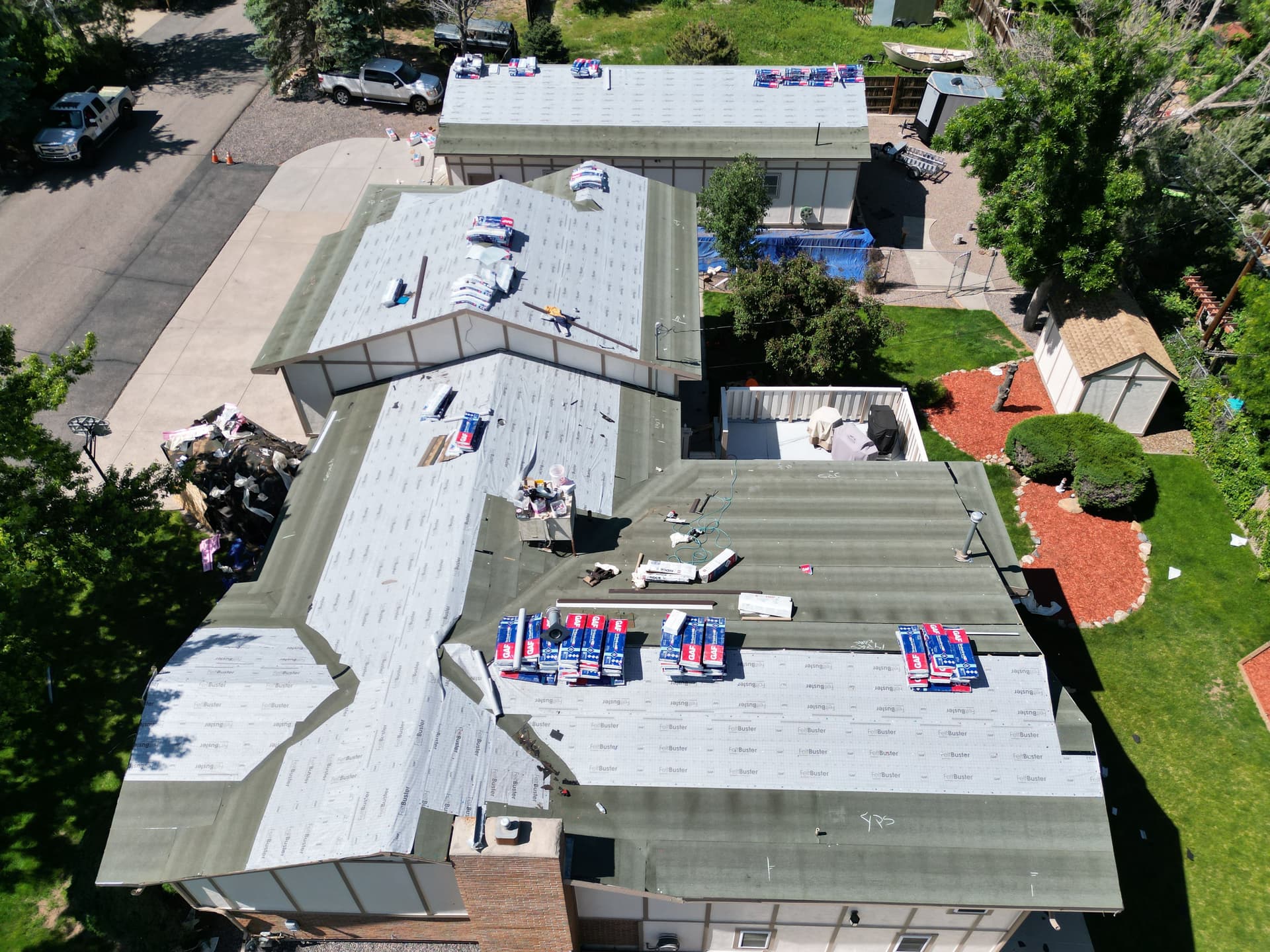
Once the decking was solid across the entire roof, we laid down a full underlayment - you can see the IceBuster peel-and-stick going in across all the roof planes. That layer is critical. It's the last line of defense between the structure and the elements before the shingles go down. We don't skip it, and we don't cut corners on coverage. The finished roof came out clean and solid, exactly what this home needed.
Ventilation isn't a small detail. It's one of the most important parts of how a roof system performs over time. We stay current on training specifically because issues like this are easy to miss if you don't know what you're looking for. If your attic feels stuffy or you're noticing higher energy bills, it's worth having someone take a real look at what's going on up there.